

One of the most exciting moments in a Dungeons & Dragons campaign is when the players suddenly realise that everything they thought they knew was wrong.
Maybe the friendly merchant was secretly working for the villain. Perhaps the mysterious stranger has been protecting the party all along. Or maybe the ancient prophecy was never about the hero they expected.
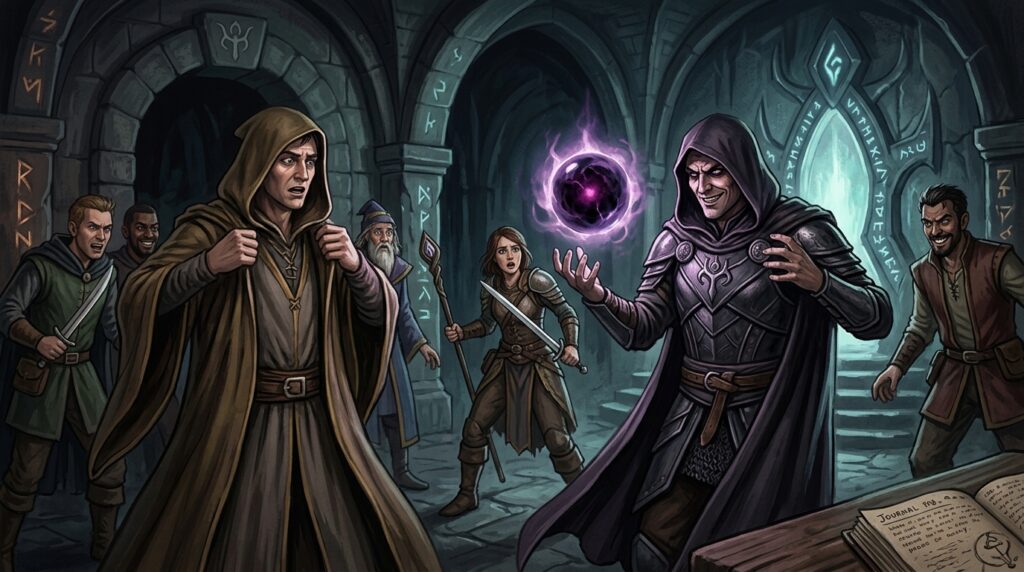
These moments are called plot twists, and when they are timed well, they can turn a good D&D session into a memorable one.
But how do you create a great reveal without confusing your players? The answer is narrative pacing.
What Is Narrative Pacing in D&D?
Narrative pacing is simply the speed at which your story develops.
As a Dungeon Master (DM), you control how quickly information, challenges and important events are revealed to your players. If you reveal everything immediately, there is little mystery. If you hide everything for too long, players may become frustrated.
The goal is to give players enough information to keep them curious without giving away the answer.
Think of your campaign like a mystery. Give your players pieces of the puzzle, but let them decide how those pieces fit together.
Start With a Question
A great way to create a plot twist is to begin with a question.
For example:
Why does the local wizard refuse to leave his tower?
At first, the players might assume he is simply strange. Later, they discover that villagers are disappearing near the tower. Eventually, they find evidence that the wizard has been investigating something beneath the town.
The important thing is that you don’t reveal the answer immediately.
Instead, give your players small clues throughout the adventure.
This is one of the simplest D&D storytelling tips for Dungeon Masters: create questions that make players want to keep playing.
Give Players Clues
A plot twist should feel surprising, but it shouldn’t feel completely random.
The best D&D plot twists make players look back and think:
“We should have known!”
You can achieve this by planting clues early on in the campaign.
Imagine the party is investigating a mysterious cult. During their first adventure, they find a strange symbol. Several sessions later, the same symbol appears on an important NPC’s ring.
You don’t need to explain what it means straight away.
Simply let the players notice it.
These small details create anticipation and reward players who pay attention.
Don’t Reveal Everything at Once
One of the biggest mistakes a DM can make is explaining too much.
Imagine the party discovers that the king is secretly working with the enemy. Instead of immediately explaining why, give the players another question.
Why is the king doing it?
Who is controlling him?
What does the enemy actually want?
A good reveal can create another mystery.
This keeps your D&D campaign moving forward and gives players another reason to investigate.
Use NPCs to Build Suspense
Your NPCs are some of the most useful tools you have for Dungeon Master storytelling.
A suspicious NPC doesn’t need to behave like an obvious villain. In fact, they can be more interesting when their behaviour is difficult to understand.
Perhaps a guard keeps appearing wherever the party goes. Is he following them?
Maybe he is secretly working for the villain.
Or perhaps he has been assigned to protect them.
Give your players enough information to form their own theories.
The important part is allowing them to be wrong.
When players create their own theories about what is happening, they become much more invested in discovering the truth.
Know When to Reveal the Twist
Timing is everything.
A plot twist is most effective when players have had enough time to become comfortable with their current understanding of the story.
For example, if the party has spent five sessions helping a friendly NPC, revealing that NPC as the villain can have a huge emotional impact.
But if you introduce the NPC five minutes before the reveal, the players probably won’t care.
Give important characters time to become part of the story.
Let players talk to them, help them and perhaps even trust them.
Then, when the truth is revealed, it means something.
Let Your Players Surprise You
Remember that D&D is collaborative storytelling.
Your players may discover your twist before you expect them to.
That’s okay. Don’t feel that you have to force them down the exact path you planned.
If they correctly guess that the mysterious merchant is secretly a vampire, consider rewarding their cleverness.
You can change the story instead.
Perhaps the merchant really is a vampire, but they aren’t the villain.
This is where some of the best D&D campaign ideas come from: taking your players’ theories and turning them into something unexpected.
The Reveal Should Change the Story
Finally, a good plot twist should have consequences.
Don’t reveal that the villain is secretly the king’s advisor and then carry on as if nothing happened.
Let the discovery change the campaign.
Maybe the kingdom is now hunting the players. Perhaps the party has to choose between protecting the king and exposing the truth.
A strong reveal should create a new problem.
That is what keeps players invested.
Master the Art of the Reveal
Great D&D narrative pacing isn’t about constantly shocking your players. It’s about knowing when to give them information, when to hold something back and when to finally reveal the truth.
Plant clues, create questions, develop memorable NPCs, and give players time to form theories.
Then let the reveal change everything.
You don’t need an enormous, complicated storyline to create a memorable D&D campaign. Sometimes, one mysterious character, one unexplained clue and one perfectly timed reveal are enough.
So, the next time you’re preparing a session behind the DM screen, ask yourself:
What do my players think is happening, and what is really happening?
That gap between those two answers is where the magic of storytelling begins.
For Dungeon Masters looking to put these ideas into practice, a tabletop gaming space can be the perfect place to bring those stories to life. At Veni Vidi Vici Games, players can enjoy Dungeons & Dragons and other tabletop RPGs, from one-shots to long-running campaigns, in a dedicated community gaming space in Romsey.